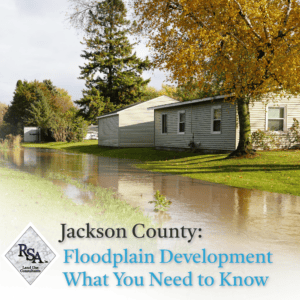
Owning property near a river, creek, or seasonal drainage can offer beautiful views and desirable building sites, but it also comes with additional regulations. Understanding Jackson County floodplain development requirements before purchasing land or beginning construction can save significant time, money, and frustration.
Floodplain regulations are designed to reduce flood risks, protect lives and property, and ensure communities remain eligible for federally backed flood insurance. Whether you’re planning a new home, an addition, or a commercial project, knowing what is required before construction begins is essential.
How do Jackson County floodplain development regulations affect construction?
Jackson County floodplain development regulations require many projects located within FEMA-designated Special Flood Hazard Areas to obtain floodplain permits, meet elevation standards, comply with construction limitations, and demonstrate that development will not increase flood risks. Careful planning early in the permitting process helps avoid costly redesigns and project delays.
Why floodplain regulations matter
 Floodplains naturally store and convey floodwater during heavy rain and snowmelt events. Development within these areas has the potential to increase flood hazards for neighboring properties if not properly designed.
Federal Emergency Management Agency (FEMA) flood maps identify areas with elevated flood risk. Local jurisdictions, including Jackson County, administer floodplain regulations that work alongside FEMA standards and the Jackson County Land Development Ordinance to guide responsible development.
Our team regularly helps property owners understand how these overlapping requirements apply to specific parcels before significant investments are made.
When is a floodplain development permit required?
A floodplain development permit may be required whenever work occurs within a mapped flood hazard area. Examples include:
- Constructing a new residence
- Building detached garages or shops
- Commercial buildings
- Manufactured home placement
- Major additions or remodels
- Grading or filling
- Utility installation
- Bridges, culverts, or access roads
Even projects that seem relatively minor can trigger review if they alter flood flows or affect flood storage capacity.
What are FEMA elevation requirements?
One of the most important components of Jackson County floodplain development is meeting required building elevations.
Most new structures located within Special Flood Hazard Areas must have the lowest occupied floor elevated to or above the Base Flood Elevation (BFE) established by FEMA. Depending on local requirements and site conditions, additional freeboard may also be necessary to provide an extra safety margin above predicted flood levels.
Elevating structures helps reduce flood damage while often lowering flood insurance premiums over the life of the building.
Construction limitations inside flood hazard areas
Building within a floodplain does not necessarily prohibit development, but it does introduce additional design requirements.
Construction may be limited by:
- Restrictions on fill placement
- Foundation design requirements
- Flood-resistant construction materials
- Utility protection standards
- Anchoring requirements for manufactured structures
- Compensatory flood storage requirements in certain situations
These standards are intended to minimize structural damage while reducing impacts on surrounding properties during flood events.
How can mitigation strategies improve project success?
Property owners often assume floodplain regulations eliminate development opportunities. In reality, thoughtful planning frequently creates workable solutions.
Some common mitigation strategies include:
- Locating structures outside mapped flood hazard areas whenever possible.
- Elevating finished floor elevations above the minimum requirements.
- Reducing unnecessary grading.
- Designing access routes that remain functional during flooding.
- Preserving natural drainage patterns.
- Working with qualified engineering and land-use professionals early in project planning.
Based on client results, addressing these issues during preliminary planning is almost always less expensive than redesigning projects after permit review begins.
Why early planning saves time and money
Floodplain regulations often intersect with grading permits, environmental reviews, access standards, septic approvals, and other land-use requirements.
We have found that evaluating these requirements before finalizing building plans helps identify potential obstacles while there is still flexibility to adjust the project. Early due diligence can shorten permitting timelines, reduce engineering revisions, and help avoid unexpected construction costs.
This becomes especially valuable for rural properties where multiple development standards may overlap.
Partner with experienced land-use professionals
Navigating Jackson County floodplain development requirements can be challenging, particularly when FEMA mapping, elevation certificates, engineering, and county permitting all intersect.
Richard Stevens & Associates works with property owners, developers, engineers, and design professionals throughout Southern Oregon to help move projects through the land-use process with confidence. Our team understands how local regulations interact and helps clients identify practical solutions before small issues become costly delays.
If you’re considering purchasing property or planning construction within a flood-prone area, contacting an experienced land-use consultant early can make the permitting process significantly smoother.
Frequently Asked Questions
Can I build inside a FEMA floodplain?
Yes. Many projects can still be approved, provided they meet applicable FEMA standards, local floodplain regulations, and permitting requirements.
Do all floodplain projects require elevation certificates?
Many new buildings and substantial improvements require elevation documentation prepared by a licensed surveyor or qualified professional as part of the permitting process.
Can floodplain regulations affect property value?
Floodplain regulations may influence development potential, insurance costs, and construction expenses. Understanding these factors before purchasing property is highly recommended.