
Wildfire has become a defining reality of land ownership and development in Southern Oregon. Longer fire seasons, drier conditions, and expanding development into rural and forested areas mean that fire safety is no longer optional—it is built directly into land use regulations. One of the most common questions property owners ask is, “what are fuelbreaks?”
Fuelbreaks are one of the most important tools used to reduce wildfire risk, and they play a central role in how properties are evaluated, permitted, and approved for development throughout the region.
 What Are Fuelbreaks?
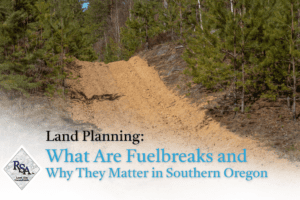 What Are Fuelbreaks?
To understand what are fuelbreaks, it helps to start with their purpose. A fuelbreak is a managed area of land where vegetation has been modified to slow the spread and intensity of wildfire. Rather than completely removing all vegetation, fuelbreaks focus on reducing combustible material and interrupting how fire moves across the landscape.
In Southern Oregon, fuelbreaks are typically required around structures and along access routes. These areas may involve removing ladder fuels, increasing spacing between trees, pruning lower branches, and controlling grasses and shrubs. The intent is to prevent a ground fire from climbing into tree canopies and to reduce the heat and speed of an approaching wildfire.
Fuelbreaks are not cosmetic landscaping features—they are regulated safety zones that are often reviewed as part of the land development and building permit process.
Why Fuelbreaks Are Critical for Structures in Southern Oregon
Southern Oregon’s terrain, vegetation, and climate make it especially vulnerable to wildfire. Many homes and commercial buildings are located near forestland, grassland, or steep slopes where fire can spread rapidly. Fuelbreaks create a defensible space that helps protect structures and the people inside them.
From a fire response standpoint, fuelbreaks also improve safety for emergency personnel. A structure surrounded by unmanaged vegetation may be impossible to defend during a wildfire. In contrast, a properly maintained fuelbreak gives firefighters a safer environment to work and increases the chances that a building can be saved.
As wildfire risk has increased, local jurisdictions have incorporated fuelbreak requirements into zoning codes, land development ordinances, and hazard mitigation standards. For property owners, this means fuelbreaks are not optional—they are a foundational element of lawful development.
How Fuelbreak Requirements Affect Land Use and Development
A key reason property owners need to understand what are fuelbreaks is because these requirements can significantly affect how land can be developed. Fuelbreak standards often influence building placement, setbacks, access design, and even the usable size of a parcel.
In some cases, fuelbreaks may extend beyond the immediate building footprint and require coordination with neighboring properties or easements. In others, terrain, zoning classifications, or fire authority approvals may allow for modified or reduced fuelbreak standards—but only through a formal review process.
Misunderstanding these requirements can lead to costly surprises. A project that appears feasible on paper may require redesign if fuelbreaks were not properly accounted for during initial planning. This is especially common in rural residential and forest-zoned areas, where wildfire regulations intersect with land use law.
The Importance of Local Code and Zoning Expertise
Fuelbreak regulations are not applied uniformly across all properties. Zoning designations, wildfire hazard maps, access conditions, and jurisdictional oversight all influence how standards are enforced. Exemptions, adjustments, or alternative compliance methods may be possible—but only when pursued correctly and early in the process.
This is where professional land use guidance becomes essential. Understanding how fuelbreak requirements interact with local codes, development standards, and zoning restrictions requires experience and familiarity with Southern Oregon regulations.
Plan With Confidence by Working With Richard Stevens & Associates
If you are considering developing property, building a home, or evaluating land for future use, understanding what are fuelbreaks—and how they affect your project—is critical. Fuelbreak requirements can shape timelines, budgets, and overall feasibility long before construction begins.
Richard Stevens & Associates helps property owners navigate the complex relationship between wildfire safety standards, zoning regulations, and land use approvals throughout Southern Oregon. Our team provides clarity, guidance, and practical solutions so your project can move forward with confidence.
Before assumptions become obstacles, contact Richard Stevens & Associates to better understand how local codes, zoning restrictions, and fuelbreak requirements may impact your current or future development plans.