
If you’re buying property or considering a development in Southern Oregon — especially in the Agate Desert or Rogue Valley region of Jackson County — it’s essential to understand what vernal pools are and how they may affect your land-use plans. At Richard Stevens & Associates (RSA), we work with buyers, sellers, and property owners to help them navigate the complex regulations surrounding protected natural features. Vernal pools in Southern Oregon are among the most important of these features, and understanding them early can prevent costly surprises later.
 What Is a Vernal Pool?
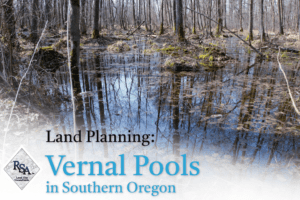 What Is a Vernal Pool?
A vernal pool is a type of seasonal wetland: a shallow, naturally occurring depression that fills with water during the rainy fall, winter, and spring months, and then dries out in late spring or early summer. Unlike lakes or ponds, vernal pool are not fed by streams or rivers. Instead, they form where an impermeable subsurface layer — often a hard claypan or rocky layer — prevents water from draining away.
This unique cycle of wet and dry phases creates a specialized ecosystem. During the rainy season, the pools host amphibians, crustaceans such as fairy shrimp, and wetland plant species adapted to temporary inundation. Once the pools dry out, seeds, eggs, and microbial life remain dormant in the soil until the next rainy cycle begins.
Vernal pools in Southern Oregon are part of an ancient landscape that has been shaped over thousands of years. Many of these features are surrounded by native grassland and distinctive soil types that support rare species found almost nowhere else.
Why Vernal Pools in Southern Oregon Are Protected
Although they may appear small or insignificant, vernal pools are legally recognized and protected natural resources. Under Oregon’s land-use and wetlands regulations — including the Jackson County Land Development Ordinance and Oregon Administrative Rules governing vernal pools — these wetlands are considered high-value ecological habitats.
Any activity that disturbs, fills, drains, or significantly alters a vernal pool typically requires state-level review and permitting. Projects that may affect these wetlands must undergo formal wetland delineation and functional assessment conducted by qualified professionals. These assessments evaluate the boundaries, hydrology, soil characteristics, and biological functions of the vernal pool to determine how development could impact the site.
If avoiding the wetland is not feasible, property owners may be required to provide compensatory mitigation. This could involve preserving or restoring other vernal pool habitats, protecting upland areas that support vernal-pool ecosystems, or purchasing credits from an approved mitigation bank. However, because vernal pools are extremely difficult to replicate — due to their unique soils, hydrology, and topography — the standards for mitigation are stringent. Once these wetlands are disturbed, they are not easily restored, which is why the state places such high value on protecting what remains.
What This Means for Property Buyers and Owners
If you own or plan to purchase land in Southern Oregon, particularly in areas with known historic vernal pool landscapes, you’ll want to evaluate whether your parcel contains these seasonal wetlands. A property that appears completely dry during the summer may still contain a vernal pool that only becomes active during the rainy season. Without proper diligence, property owners may inadvertently plan construction, excavation, grading, or improvements in a protected wetland — which can lead to delays, redesigns, additional costs, or enforcement actions.
Understanding whether a vernal pool is present on your land allows you to budget appropriately for assessments, determine whether avoidance is possible, and plan your project in a way that complies with state and county requirements. Early awareness also prevents unintended damage to ecologically sensitive areas, helping you maintain good stewardship of your land while avoiding regulatory complications.
Why You Should Contact Richard Stevens & Associates Before You Buy or Build
Vernal pools are more than seasonal pools — they are ecologically significant, legally protected wetlands that can directly influence your land’s development potential. Understanding them before you purchase or modify property is essential for avoiding costly delays, ensuring compliance, and preserving the unique ecological systems of Southern Oregon.
Richard Stevens & Associates specializes in land-use consulting throughout Southern Oregon, with deep experience in understanding how local ordinances and state wetlands rules apply to real property. Before you invest in new land or begin a construction project, our team can help you determine whether a vernal pool in Southern Oregon might be located on your property and what that means for your plans.
We assist clients by reviewing soil types, historic landform data, development overlays, and regulatory requirements. We can also coordinate wetlands professionals to conduct the necessary delineations and assessments required for compliance. If mitigation is needed, we guide property owners through their options so they can make informed decisions and keep their project moving forward.
If you are considering buying land or beginning a new project, contact Richard Stevens & Associates first. We’ll help you understand how a vernal pool in Oregon may affect your property — and ensure your investment and your plans are protected from the start.